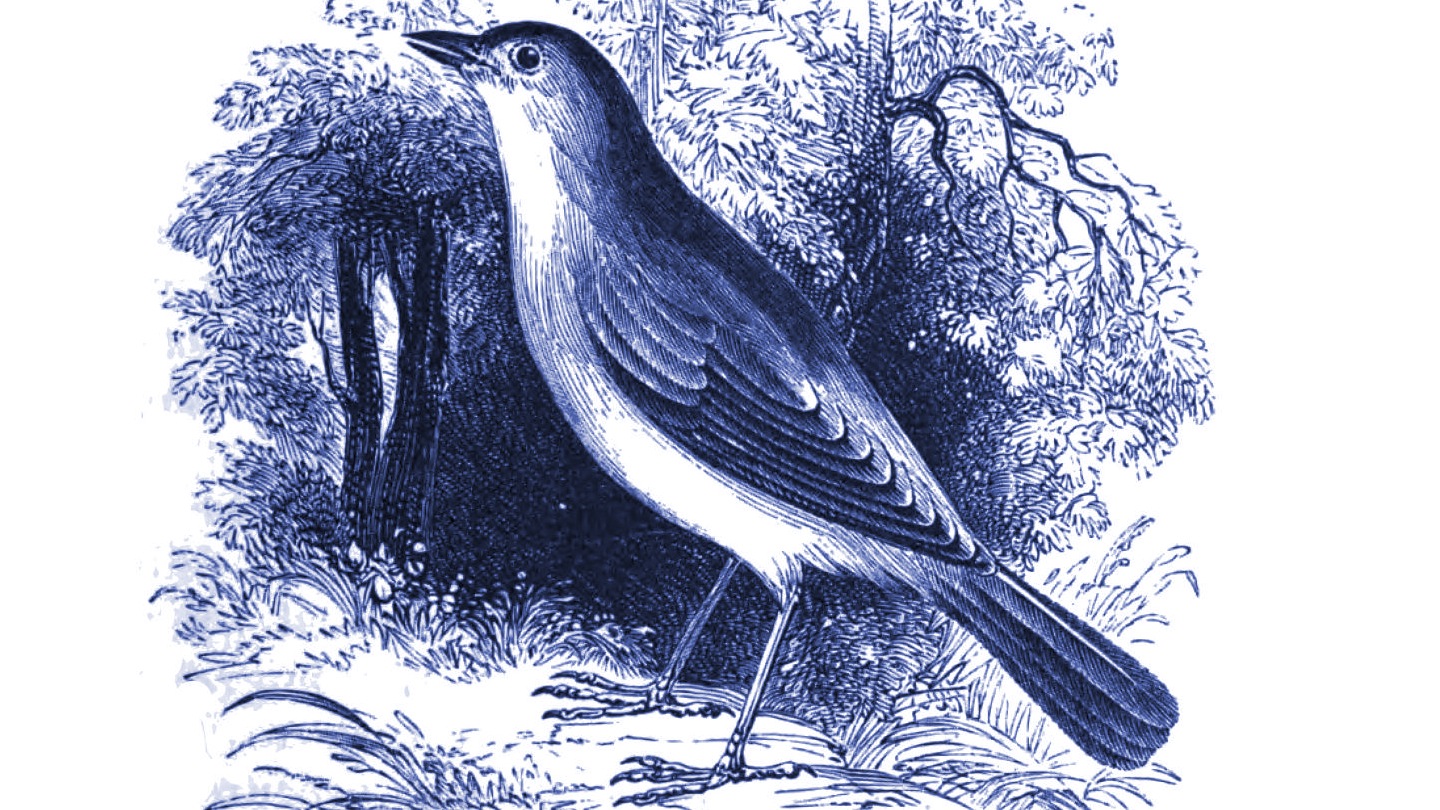
Ode to a Nightingale

My heart aches, and a drowsy numbness pains
   My sense, as though of hemlock I had drunk,
Or emptied some dull opiate to the drains
   One minute past, and Lethe-wards had sunk:
’Tis not through envy of thy happy lot,
   But being too happy in thine happiness,
      That thou, light-wingèd Dryad of the trees,
          In some melodious plot
   Of beechen green, and shadows numberless,
      Singest of summer in full-throated ease.

…O for a beaker full of the warm South,
   Full of the true, the blushful Hippocrene,
      With beaded bubbles winking at the brim,
         And purple stainèd mouth;
   That I might drink, and leave the world unseen,
      And with thee fade away into the forest dim:

Fade far away, dissolve, and quite forget
   What thou among the leaves hast never known,
The weariness, the fever, and the fret
   Here, where men sit and hear each other groan;
Where palsy shakes a few, sad, last grey hairs,
   Where youth grows pale, and spectre-thin, and dies;
      Where but to think is to be full of sorrow
         And leaden-eyed despairs,
   Where Beauty cannot keep her lustrous eyes,
      Or new Love pine at them beyond tomorrow.
 
…Darkling I listen; and for many a time
   I have been half in love with easeful Death,
Call’d him soft names in many a musèd rhyme,
   To take into the air my quiet breath;
Now more than ever seems it rich to die,
   To cease upon the midnight with no pain,
      While thou art pouring forth thy soul abroad
         In such an ecstasy!
   Still wouldst thou sing, and I have ears in vain—
      To thy high requiem become a sod.

Thou wast not born for death, immortal Bird!
   No hungry generations tread thee down;
The voice I hear this passing night was heard
   In ancient days by emperor and clown…
Adieu! adieu! thy plaintive anthem fades
   Past the near meadows, over the still stream,
      Up the hillside; now tis buried deep
         In the next valley-glades:
   Was it a vision, or a waking dream?
      Fled is that music: —do I wake or sleep?
–John Keats (1795-1821)